Why is there only one Irish cheese with protected status?
Written on: Marso 05, 2021
Title : Why is there only one Irish cheese with protected status?
link : Why is there only one Irish cheese with protected status?
Why is there only one Irish cheese with protected status?
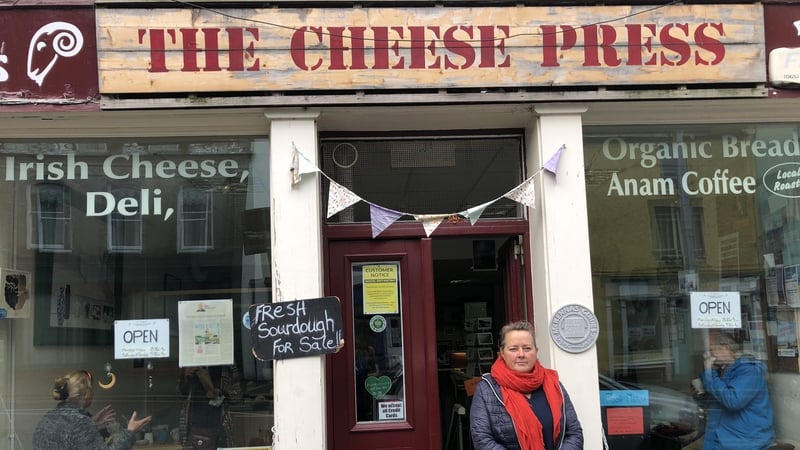
source: RTE Brainstorm
Opinion: the protected designation of origin scheme could be of huge commercial benefit to Irish cheese makers
Would it surprise you to learn that Ireland has only one protected designation of origin (PDO) cheese? By comparison with Ireland's only PDO cheese (the Imokilly Regato), Greece has 23 PDO cheeses.
First of all, what's a PDO and why is it so important? PDO refers to a number of European Union schemes which promote and protect names of quality agricultural products and foodstuffs. Aside from the PDO scheme, there's also schemes for protected geographical indication and traditional specialities guaranteed.
All of these schemes aim to protect the reputation of the regional foods, promote rural and agricultural activity, help producers obtain a premium price for their authentic products and eliminate unfair competition and misleading of consumers by non-genuine products, which may be of inferior quality or of different flavour.
From RTÉ Radio 1's Countrywide, a discussion on the Protected Designation of Origin scheme for food
Products registered under these schemes may be marked with a special logo to help identify those products. The schemes are based on the legal framework provided by the EU Regulation No 1151/2012 of the European Parliament on quality schemes for agricultural products and foodstuffs.
The laws basically protect the names of wines, cheeses, hams, sausages, seafood, olives, olive oils, beers, balsamic vinegar, regional breads, fruits, raw meats and vegetables. Examples of PDO labelled foods are the Italian Gorgonzola and Parmigiano-Reggiano, the Greek feta and the French roquefort.
So how does PDO status protect local producers? Take, for example, the Roquefort cheese. This blue cheese must be made from milk of a certain breed of sheep and matured in the natural caves near the town of Roquefort-sur-Soulzon in the Aveyron region of France, where it is colonised by the fungus Penicillium roqueforti that grows in these caves.
From Ile de France Cheese, the strict rules which define what can be called Roquefort cheese
The system is similar to appellation systems used throughout Europe, such as the appellation d'origine contrôlée in France, the denominazione di origine controllata in Italy, the denominação de origem controlada in Portugal, the denumire de origine controlată system in Romania and the denominación de origen in Spain.
The cheese industry in Ireland has many unique characteristics. On one hand, we have the major players, big dairy companies that make mostly cheddar from cow's milk. Then, we have tens of small family business who make amazing cheeses in sensory terms. A PDO labelling would help these producers in promoting their cheeses nationally but also (and mainly) internationally.
My research team studies the cardioprotective properties of sheep and goat cheeses. These cheeses have strong bioactivities against platelet aggregation and the onset of atherosclerosis. We have screened a number of ovine (sheep) and caprine (goat) cheeses and all these cheeses have strong anti-thrombotic and anti-inflammatory properties.
From RTÉ Radio 1's Today show, chef Domini Kemp and food writer Catherine Cleary's guide to Irish cheese
Due to the Covid-19 pandemic, the hospitality sector has closed and small cheese companies have lost a huge part of their trade. Consumers now buy from home via online sales so small cheese businesses rely on having a good website and online strategy to boost their online sales. But they also need to differentiate themselves from other cheese players. The PDO labelling is a strong way to provide an unique selling point for these family businesses and the Government needs to help them to obtain such pedigree.
So why haven't Irish cheese producers sought PDO status for their products? Anecdotal evidence from cheese producers refers to the lengthy and laborious procedure to obtain PDO status. This must change. The Irish food board, Bord Bia, needs to create simpler procedures and support mechanisms for farmers who wish to apply for PDO status.
In today’s business environment where food exports to EU are so straightforward, the fact that Ireland has only one PDO cheese looks like we are shooting ourselves in the foot. Irish farmers produce unique cheeses with superb sensory properties that can easily compete on an European and international level, but PDO status is a must. The State needs to simplify the process and create dedicated teams of scientists to collaborate with farmers in order to boost PDO applications.
The views expressed here are those of the author and do not represent or reflect the views of RTÉ
That's the article Why is there only one Irish cheese with protected status?
You are now reading the article Why is there only one Irish cheese with protected status? with link address https://trensnviral.blogspot.com/2021/03/why-is-there-only-one-irish-cheese-with.html