Ας μιλήσουμε για καρνάγια και ναυπηγοεπισκευαστικές ζώνες!
Written on: Abril 11, 2021
Title : Ας μιλήσουμε για καρνάγια και ναυπηγοεπισκευαστικές ζώνες!
link : Ας μιλήσουμε για καρνάγια και ναυπηγοεπισκευαστικές ζώνες!
Ας μιλήσουμε για καρνάγια και ναυπηγοεπισκευαστικές ζώνες!
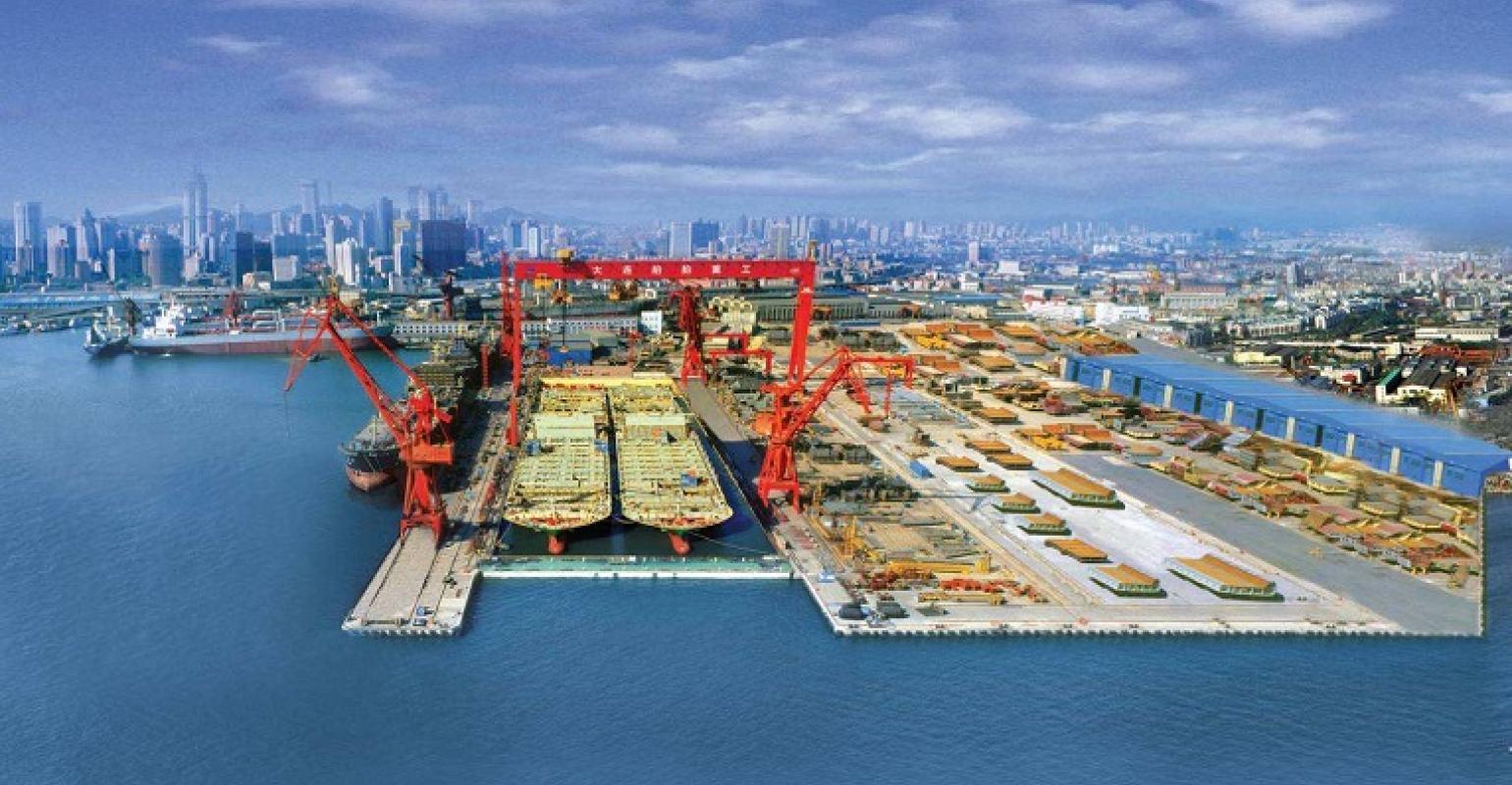
Σήμερα είναι επίκαιρο να δούμε το θέμα των ναυπηγείων και των καρνάγιων σε σχέση με την ρύπανση που προκαλούν.
Η διεθνής βιβλιογραφία βρίθει παραδειγμάτων!
The 180 ship recycling yards located on Alang-Sosiya beach in the State of Gujarat on the west coast of India is the world's largest cluster engaged in dismantling. Yearly 350 ships have been dismantled (avg. 10,000 ton steel/ship) with the involvement of about 60,000 workers. Cutting and scrapping of plates or scraping of painted metal surfaces happens to be the commonly performed operation during ship breaking. The pollutants released from a typical plate-cutting operation can potentially either affect workers directly by contaminating the breathing zone (air pollution) or can potentially add pollution load into the intertidal zone and contaminate sediments when pollutants get emitted in the secondary working zone and gets subjected to tidal forces. There was a two-pronged purpose behind the mathematical modeling exercise performed in this study. First, to estimate the zone of influence up to which the effect of plume would extend. Second, to estimate the cumulative maximum concentration of heavy metals that can potentially occur in ambient atmosphere of a given yard. The cumulative maximum heavy metal concentration was predicted by the model to be between 113 μg/Nm(3) and 428 μg/Nm(3) (at 4m/s and 1m/s near-ground wind speeds, respectively). For example, centerline concentrations of lead (Pb) in the yard could be placed between 8 and 30 μg/Nm(3). These estimates are much higher than the Indian National Ambient Air Quality Standards (NAAQS) for Pb (0.5 μg/Nm(3)). This research has already become the critical science and technology inputs for formulation of policies for eco-friendly dismantling of ships, formulation of ideal procedure and corresponding health, safety, and environment provisions. The insights obtained from this research are also being used in developing appropriate technologies for minimizing exposure to workers and minimizing possibilities of causing heavy metal pollution in the intertidal zone of ship recycling yards in India.
Ecological Risk Posed by Heavy Metals Contamination of Ship BreakingYards in Bangladesh
Pollution of water and soils by heavy metals is an emerging problem in industrialized countries.
The present study was conducted to investigate the heavy metals concentration in water and sediment
samples from ship breaking sites of Sitakunda to assess the potential ecological risk posed by heavy metal
using different methods. Heavy metals concentration was analyzed by Atomic Absorption Spectroscopy.
Concentrations of all the tested heavy metals except Cr in water samples of ship breaking site, Sitakunda were lower than recommended values. The mean concentration of Cr was found 0.511± 0.284 mg/l. Concentrations of all the tested heavy metals except Mn in sediment samples were higher than standard limit. The concentrations of Pb, Mn, Cr, Cu and Zn in the sediment were 55.93±18.70, 20.08±4.03, 106.8±47.65, 50.09±18.31, and 70.71±19.45 mg/kg, respectively. Based on Geoaccumulation Index, Contamination factor, Sediment Quality Guidelines, the sediment of ship breaking site can be treated as unpolluted to moderately polluted with Pb, Zn, Cr and Cu but unpolluted with Mn. The Enrichment factors of Pb, Mn, Cr, Cu and Zn in the sediment were: 2.97±0.98, 0.035±0.008, 1.97±0.88, 1.99±0.73, and 1.17±0.32, respectively. The Enrichment factor (>1) in all sampling sites, suggesting source of those metals (Pb, Cr, Cu and Zn) were more likely to be anthropogenic. Based on the Potential Ecological Risk Index the ship breaking site posed to low risk to the environment. The results of present study clearly indicated that the ship breaking site was moderately polluted with heavy metals and pose low risk to the ecosystem.
Distribution of Heavy Metals in Surface Sediments of the Bay of Bengal Coast
The concentrations of major (Si, Al, Ca, Fe, and K) and minor (Cd, Mn, Ni, Pb, U, Zn, Co, Cr, As, Cu, Rb, Sr, and Zr,) elements in the surficial sediments were studied in an attempt to establish their concentration in the Bengal coast. It was revealed that the majority of the trace elements have been introduced into the Bengal marine from the riverine inflows that are also affected by the impact of industrial, ship breaking yard, gas production plant, and urban wastes. The concentration of heavy metals was measured using Atomic Absorption Spectroscopy and Energy Dispersive X-ray fluorescence instruments. The highest concentrations for several trace elements were thus recorded which generally decrease with distance from the coast. It was observed that the heavy metal concentrations in the sediments generally met the criteria of international marine sediment quality. However, both the contamination factor and pollution load index values suggested the elevation of some metals’ concentrations in the region. Constant monitoring of the Bengal coast water quality needs to be recorded with a view to minimizing the risk of health of the population and the detrimental impacts on the aquatic ecosystem.
Γιατί τα πλοία είναι τοξικά? Why ships are toxic?
That's the article Ας μιλήσουμε για καρνάγια και ναυπηγοεπισκευαστικές ζώνες!
You are now reading the article Ας μιλήσουμε για καρνάγια και ναυπηγοεπισκευαστικές ζώνες! with link address https://trensnviral.blogspot.com/2021/04/blog-post_11.html